Next on the workbench after the Series VI: the HO scale Talgo Series 8, Oregon’s Amtrak Cascades trainsets Mt. Bachelor and Mt. Jefferson, modelled at 1:87.1 as a complete 13-car set. Here’s where the design stands.
About the prototype
Oregon ordered its two Talgo Series 8 trainsets in 2010, and Talgo built them in Milwaukee, Wisconsin, as an updated version of the Talgo trains already serving the Pacific Northwest. Named Mt. Bachelor and Mt. Jefferson after two of Oregon’s Cascade peaks, they were delivered in 2013 to join the Amtrak Cascades fleet between Eugene, Portland, Seattle and Vancouver, British Columbia. The biggest change is up front: the cab is built into the end power car, which gives the Series 8 its distinctive nose and does away with the tall transition fins of the earlier sets.
The cab car
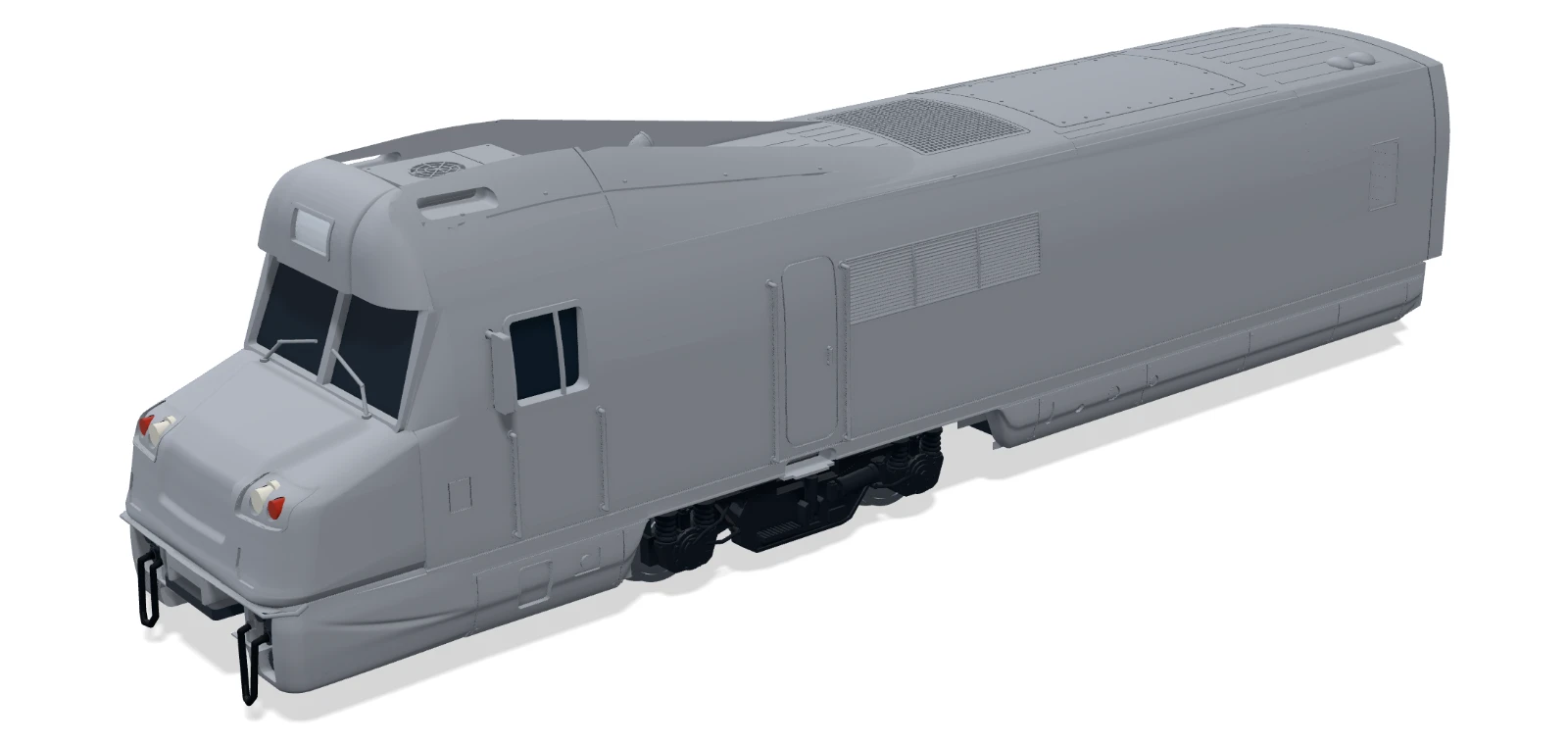
The cab car leads the set. Its nose, hood and lower skirting are fitted from photographs of the Oregon cars: four nose lamps, a glazed twin headlight, recessed MU bays with separate jumper cables, and a full roof of equipment detail. Six LED positions are designed in for the headlights and markers, and the base comes plain or with a speaker pocket.
 BodyResin, with glazing and lenses
Cab interior
BasePETG chassis, plain or speaker
TruckScrew-assembled
Thirteen cars, each with its own interior
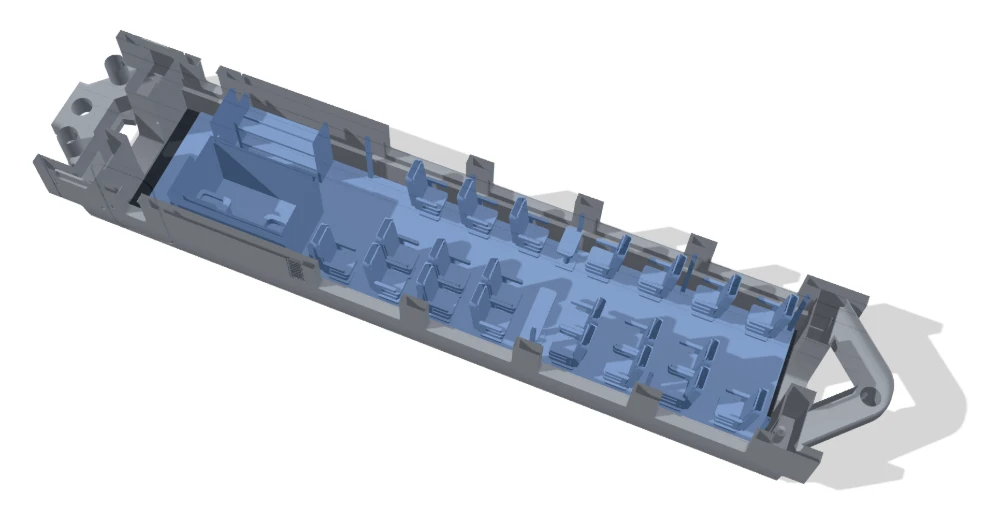
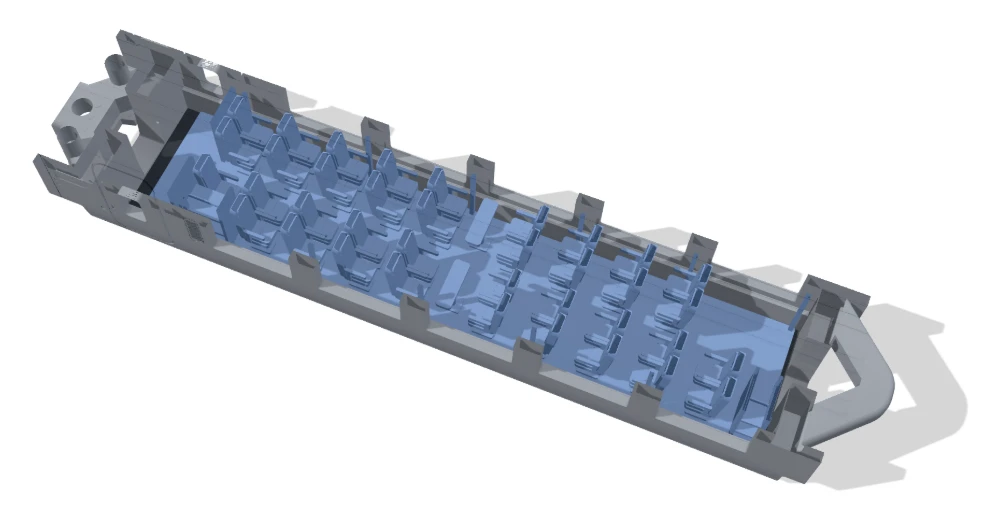
Behind the cab come two Custom Class cars, the dining car, the bistro, seven coaches and the baggage car. The seating follows the manufacturer’s floor plans: no generic layouts, and a separate interior wherever the real cars differ, even when they share a body.
 ShellResin
Interior21 seats, accessible restroom
BasePETG chassis
Each interior is a separate resin insert. It fits up through the floor opening and sits on the base, so the passenger shells themselves don’t change.
As on the Series VI, the shells and interiors are resin-printed for fine detail, and each base, the car’s chassis, is filament-printed in PETG for strength and heat resistance. PETG holds its shape to about 70 °C (158 °F) and doesn’t soften until around 80 °C (176 °F), some 20 °C higher than PLA, the most common printing plastic, so the chassis stays straight and true in a warm layout room.
Custom Class
×2
21 seats in a 2+1 layout, a wheelchair space and an accessible restroom.
Coach
×7
37 seats with table pairs, or 29 plus an accessible restroom.
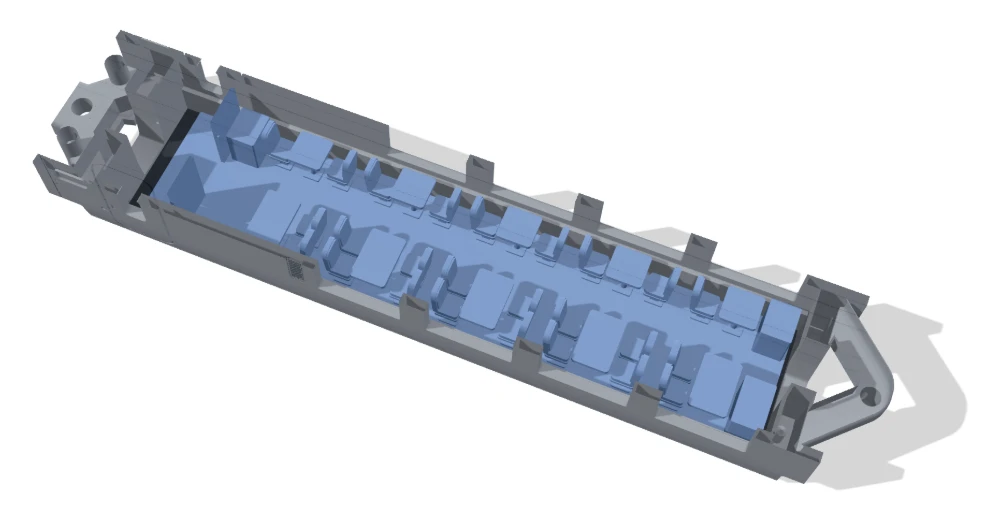
Dining car
×1
25 chairs at ten tables.
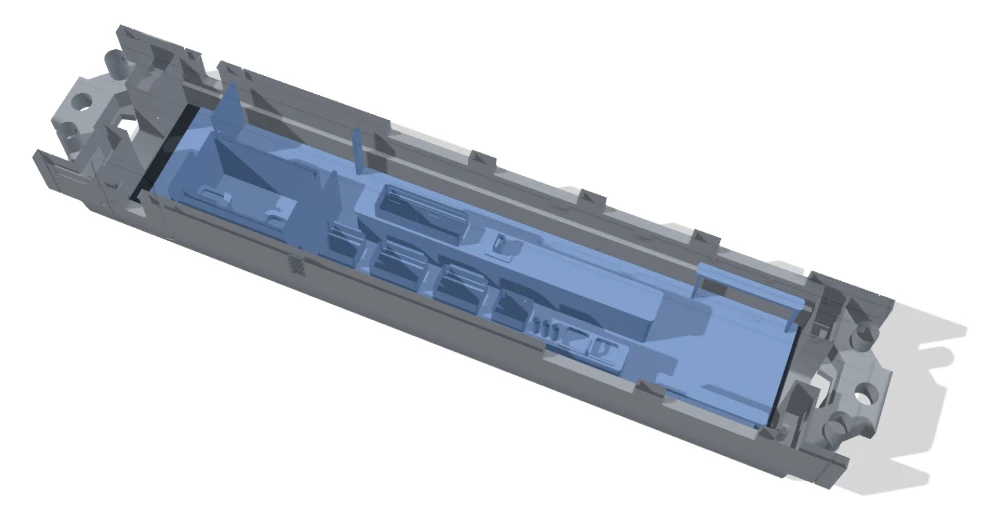
Bistro
×1
Public counter, galley equipment and an accessible restroom.
The baggage car gets a bicycle rack with ten upright channels, plus separate rear office and equipment pieces.
Paint stencils for the Cascades scheme
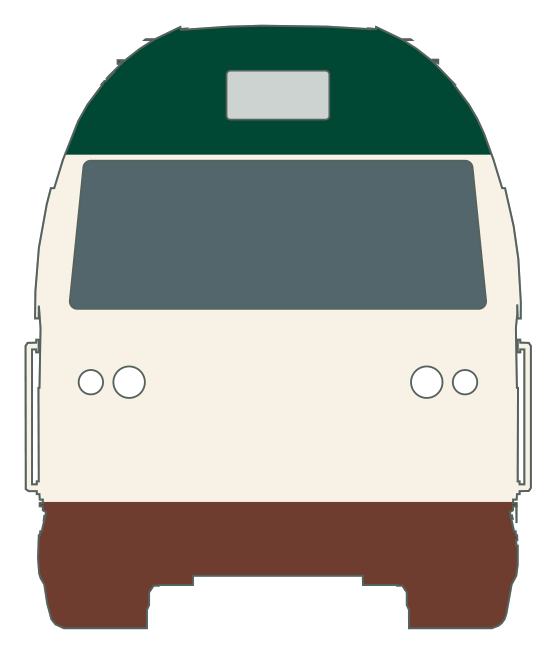
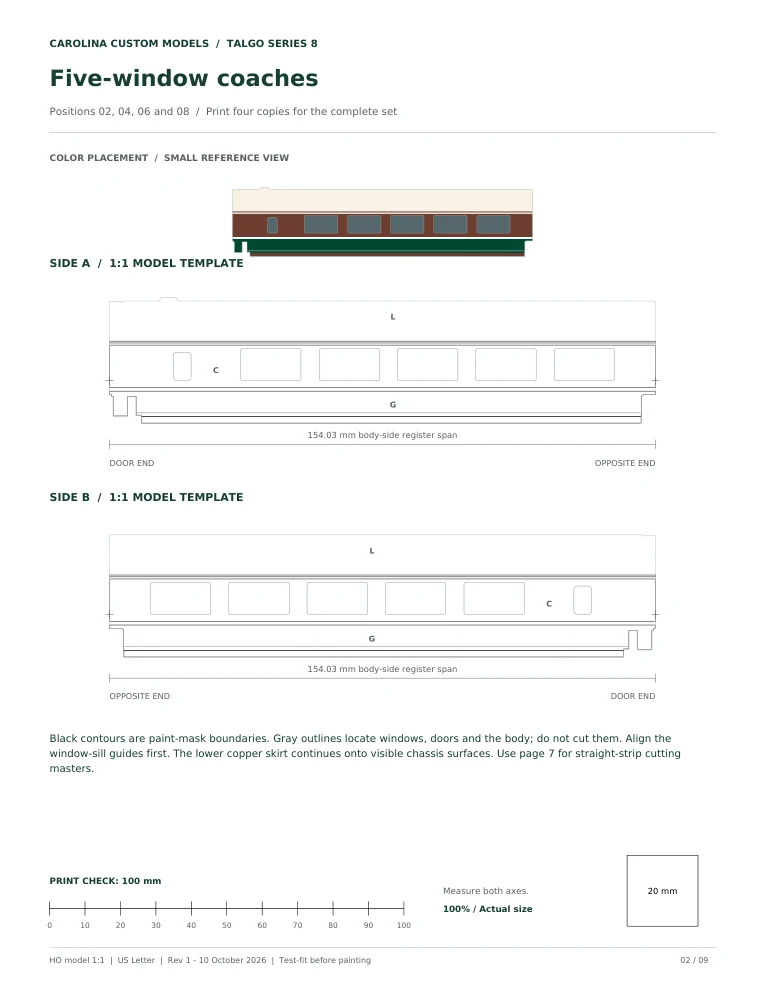
The Series 8 is designed to be painted at home, so its stencils are drawn from the model’s own shells, not from generic drawings. They cover Oregon’s original Cascades scheme on every car type: the cream body, the copper window band and skirt, the evergreen lower band and cab fairing, and the crisp white separators between them.
- Double Latte Cream body and passenger roof
- Castilian Copper Window band and lower skirt PMS 7595 C
- Evergreen Lower band and cab fairing PMS 560 C
- White Separators and fine outlines
- Nugget Cascades emblem and lettering PMS 875 C metallic
Colours follow Amtrak’s published values. Screens and printers vary, so match a dried paint sample under your layout lighting.
Where each colour goes
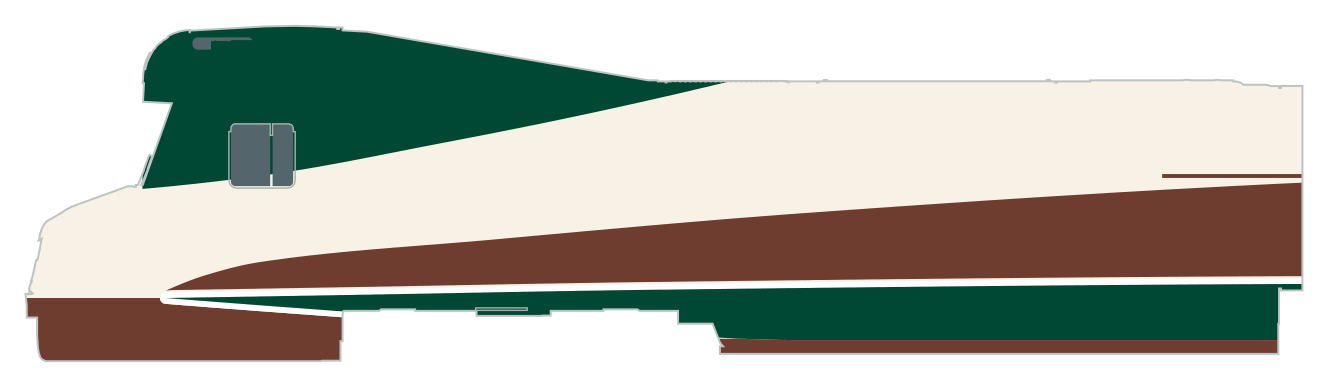
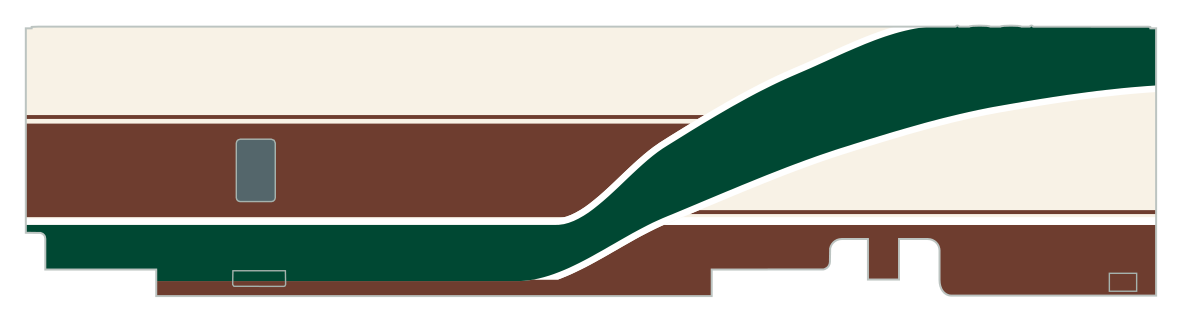
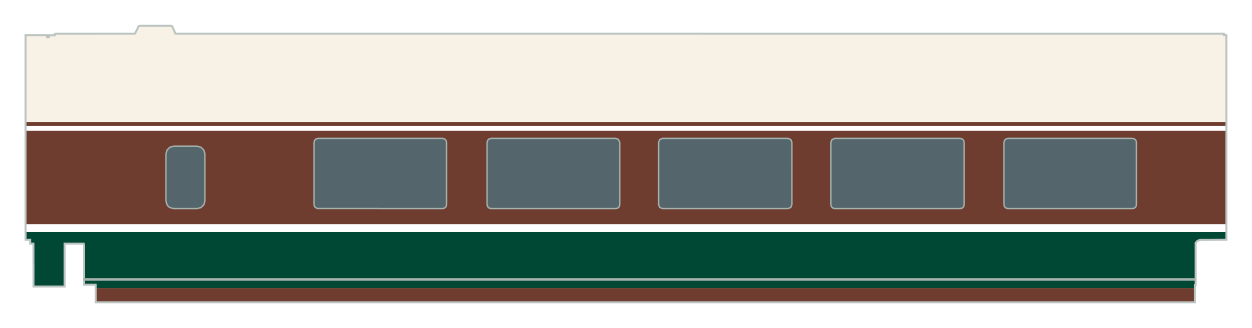
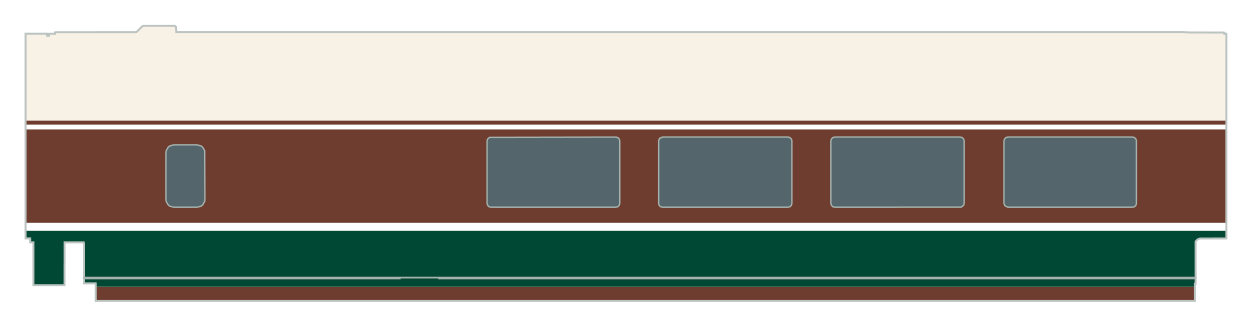
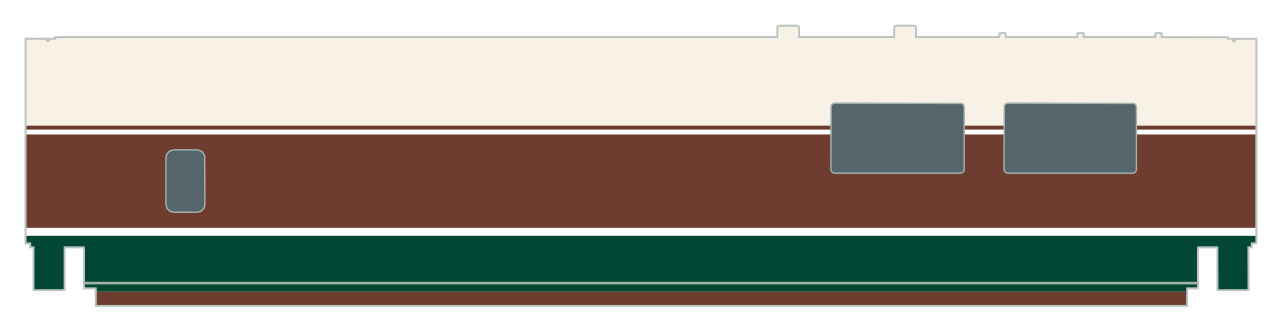
Print, cut, mask
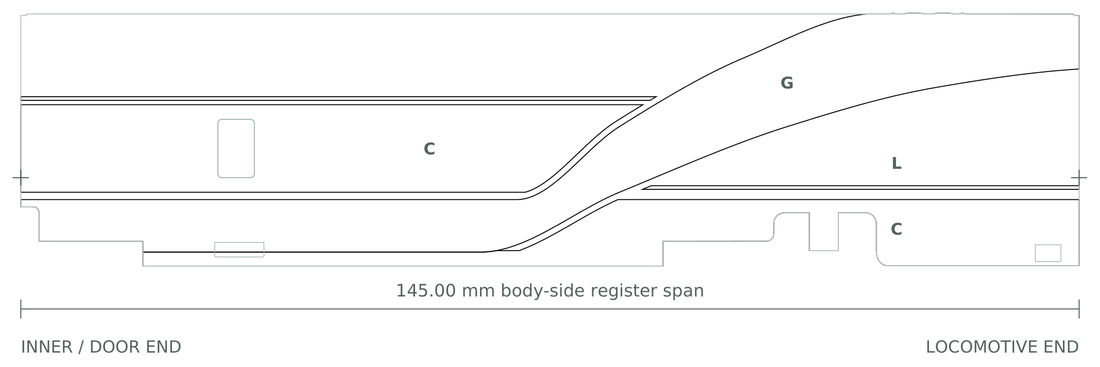
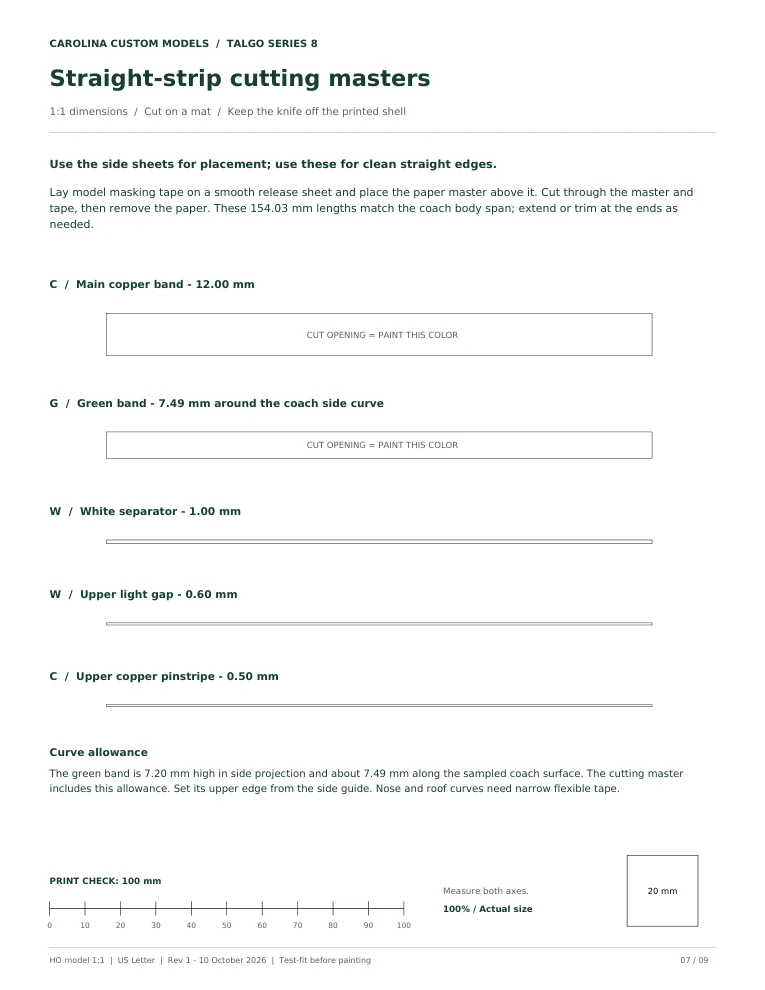
Each car gets a template for both sides, printed at actual size on US Letter with a 100 mm ruler and a 20 mm square to check the scale before you cut. Black lines are the mask edges and letters mark the colour; gray outlines locate the windows and doors. Straight-strip masters give clean edges on the long bands, and the cab nose has its own front guide. This first revision will be test-fitted on the first printed shells.
Where it stands
The cab car and all the interiors are designed and pass their digital fit checks, and the first revision of the paint stencils is drawn. Nothing has been test-printed yet, so there’s no price or date. When it’s ready, reservations will open here the same way as the Series VI.
Questions, or a car you’d like to see? Email support@carolinacustommodels.com.